Skip to content

Labelling hazardous substances

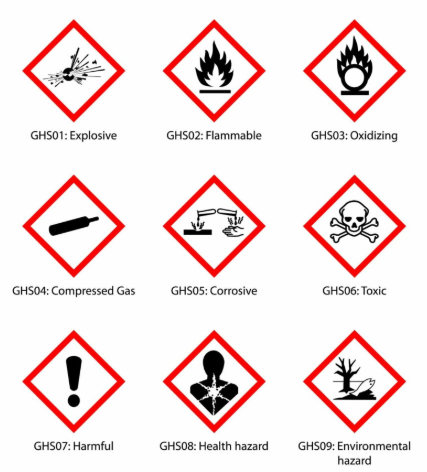
Labelling is often where chemical management systems break down and there is a failure to manage the hazards associated with chemicals .
What are the options for chemical labelling?

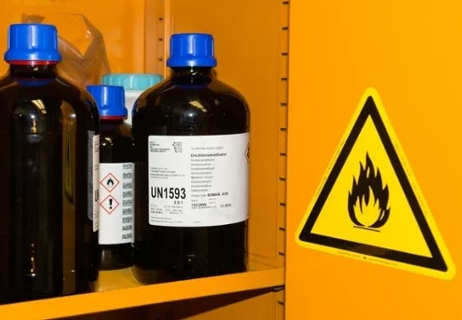
When a substance is transferred into another container, responsibility for maintaining appropriate labelling generally falls on the user.

As part of managing the hazards associated with chemicals, products supplied by manufacturers or distributors should already be appropriately labelled. However, when the substance is no longer in the original container, businesses must ensure the necessary hazard information remains available.

Where a substance is decanted into another container and remains under the immediate control of the person using it, full secondary labelling may not always be necessary. However, containers used for storage or shared use should be appropriately labelled.

Businesses occasionally encounter products with incomplete or non-compliant labelling, particularly imported products or products transferred between suppliers. Manufacturers and suppliers are responsible for correctly labelling the products they sell.

Users may also unintentionally obscure labels by how containers are stored or positioned during use.

However, the most common issue arises when chemicals are decanted from their original container into another container.

For more information – https://winsland.co.nz/labelling-hazardous-substances/

Managing Hazardous substances

Managing hazardous substances?

We are often asked what is required for managing hazardous substances. There are so many regulations, lots of numbers and letters. The article has a checklist for you.
The classification and quantity determines what is required.

WorkSafe’s Hazardous Substances Calculator builds your inventory and tells you which controls apply — it is one way to find out exactly what you need to do. Unfortunately, it is not user friendly in that it does not use commercial names, does not deal well with “mixtures” and requires a HSNO number which not all SDS provide. Winsland’s comprehensive guide provides an easy and comprehensive alternative.

All about Safety Data Sheets (SDS)?

Safety Data Sheets (SDS) are a key to chemical safety safety, providing information on the hazards associated with chemicals and the precautions required for their handling, storage, emergency response and disposal.

The SDS deliver safety working together with labelling of containers. The SDS provides more detailed information than, the product label. But the label is more visible and immediately accessible, while the SDS provides the supporting detail.

When examining issues with SDS, it is important to consider labelling as well. Organisations often have the required SDS available—possibly dog-eared and covered in workshop grime—but fall short when it comes to ensuring containers are correctly labelled.

Outdated health and safety practice

Best practice in Health and Safety

Health and safety is not about a manual gathering dust or a forgotten policy. Best practice in health and safety is about embedding risk management and legal compliance into everyday work so safety becomes “just the way we do things around here.”

High-performing SMEs treat health and safety as a core business function that protects people, reduces risk, and improves performance.

Visible leadership – Owners and managers lead by example.

Focus on Critical Risks – Great businesses identify the three to five hazards most likely to cause serious harm.

Continuous improvement – Leading organisations are always looking for better ways to work.

Worker Engagement – the people doing the work often know the risks best.

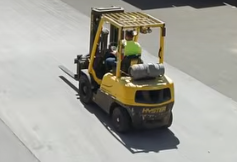
Forklifts pose a critical risk

Forklift safety – a critical risk

**Forklift Safety**

If your business uses forklifts — even occasionally — their operation should be treated as a **critical risk**. Forklifts combine heavy mobile equipment, restricted visibility, pedestrians and moving loads, creating the potential for serious injury.

Effective forklift safety depends on three key areas: **pedestrian segregation, operator competence and safe equipment**. Operators need more than a forklift certificate; they must be trained and assessed for the actual forklift, tasks and workplace in which they operate.

Good traffic management, competent operators and properly maintained and equipped forklifts work together to reduce the risk of pedestrian strikes, rollovers, falling loads and collisions.

All about pre-qualification

Clients using established prequalification providers are increasingly expressing frustration at the time, complexity, and cost involved in the process. They want an alternative path to prequalification appropriate to their nature – their size and the reality of typically working in a small team on a narrow range of activities.

As we have previously discussed in our article on prequalification (https://winsland.co.nz/pre-qual/), prequalification has evolved into a complex and costly process, largely driven by the requirements of large organisations and commercial providers. While well intentioned, it often places a disproportionate burden on small and medium-sized businesses.

Rather than simply highlighting the problem, we decided to do something to help SME along the alternative path to prequalification that already exists and which is appropriate to the nature of SME.

Industry platforms such as Tōtika recognise standardised contractor assessment. For SMEs audited by certified lead auditors against ISO 45001, the audit itself can provide an alternative means of demonstrating compliance with the standard. It covers the same ground, with ISO 45001 providing a common framework. Winsland consultants are now qualified to carry out these assessments.

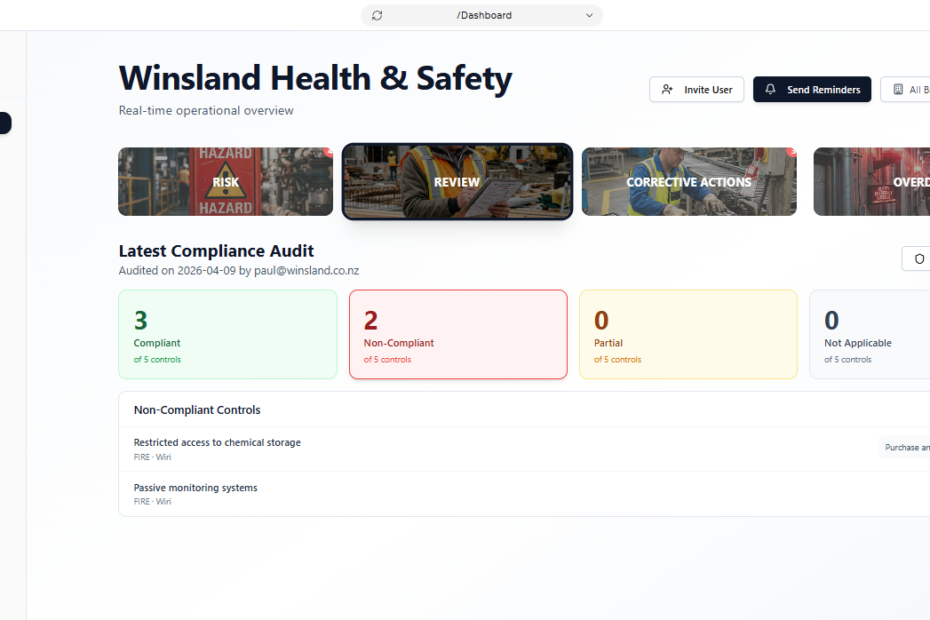
Combined with our Health and Safety App (https://winsland.co.nz/app/), which helps businesses create, manage, and store their health and safety records, we believe this provides a practical and cost-effective alternative to many traditional prequalification processes.

HSWA 2026 | What Changes for Small Businesses

The Health and Safety at Work Amendment Act 2026, which received Royal Assent in July 2026 and comes into force on 1 April 2027, aims to reduce compliance burdens for small businesses while encouraging greater focus on serious workplace risks. A key reform is the expanded use of Approved Codes of Practice (ACOPs), intended to provide clearer guidance on what legal compliance requires.

For well-managed businesses, however, the practical impact may be limited. Organisations dealing with machinery, vehicles, electricity, hazardous substances, construction, or working at height will still be required to eliminate or minimise risks so far as is reasonably practicable. The amendments do not create a new category of “critical risks”; businesses remain responsible for identifying and controlling hazards capable of causing serious harm.

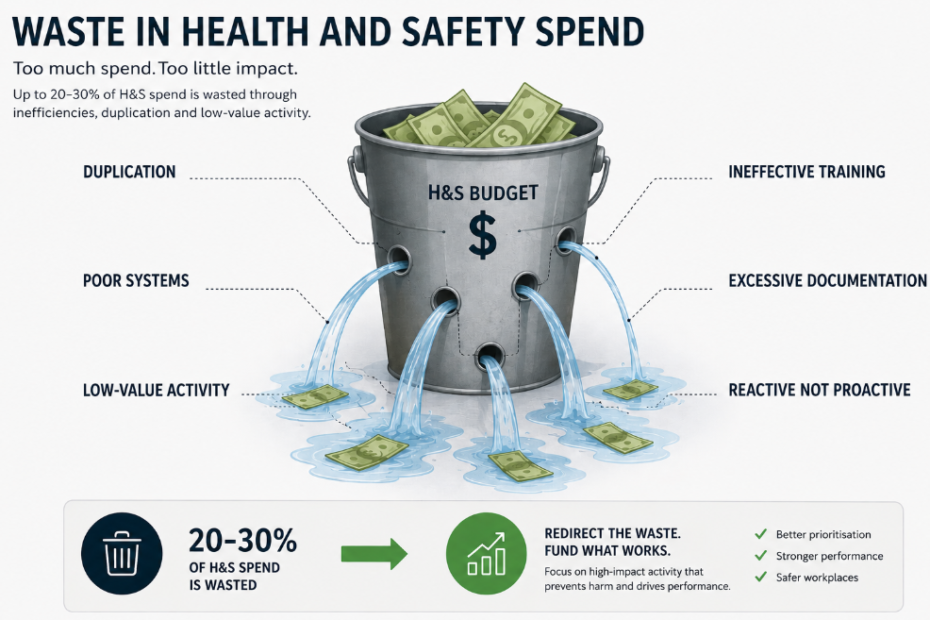
Although the reforms encourage businesses to prioritise significant risks over minor hazards, this principle already exists under the concept of reasonable practicability. The greater issue may be excessive paperwork and low-value compliance activities rather than poor management of serious hazards.

The evidence supporting major legislative change is also debatable. While the reforms seek to reduce uncertainty and compliance costs, there is limited evidence that businesses were systematically neglecting serious risks while over-managing trivial ones.

Overall, the amendments are unlikely to require major operational changes for businesses already managing significant risks effectively. Ultimately, reducing workplace harm will depend more on leadership, accountability, appropriate resource allocation, and organisational culture than legislative wording alone.

ISNetworld – a must for oil sector contractors

We have been approached about assisting an organisation to complete an ISNetworld assessment, which is heavily used by oil companies to pre-qualify contractors.
If organisations want to contract in the oil sector, there are certainly a new set of hoops to jump through.
The good news? These requirements don’t diverge significantly from standard ISO 45001 health and safety systems, though ISNetworld places greater emphasis on integrated Quality and Environmental criteria.
As with Totika pre-qualification, if you are already working with Winsland, you will find you already have substantially what you require to complete this process. Give us a call if you need our assistance!

due dil

Health and safety issues in construction

Lately, we’ve been busy supporting a wide range of construction projects across South Auckland, working alongside builders, plumbers, electricians, drainlayers, painters, tilers—in fact, almost every specialist trade.

It’s been a valuable learning experience, reinforcing what we’ve long believed: simply putting a standard sign on the fence that everyone ignores or displaying a “Site Safe” sticker on a van does little to improve health and safety. In some cases, it can even create a false sense that health and safety is being effectively managed, which may increase risk.

There is still plenty of work to do in this high-risk sector. It is full of skilled, committed people, but health and safety processes are often inconsistent or ineffective.

We have also been involved in discussions with WorkSafe. This included situations where scaffolding is closed partway through being erected, or concerns are raised about workers being supported by a standard 200 × 50 mm scaffold plank. These illustrate the need for practical experience and recognition of the experise of qualified people. That’s a conversation for another day, but it highlights the challenges the industry continues to face.

A positive development is the new Approved Code of Practice (ACOP) for Identifying Health and Safety Roles and Responsibilities on a Residential Construction Site. Winsland has been invited to provide further input, having also contributed to the initial draft. The current target is for the ACOP to be published by the end of July 2026.

There is considerable confusion across the sector about roles and responsibilities, so the new ACOP should provide valuable clarity. However, it will not, on its own, solve all of the health and safety challenges facing residential construction.

We are also working with WorkSafe on the adequacy of existing guidance material and the need for an ACOP covering energy-related projects.

Contact us to discuss how we can support your health and safety needs.
apprentice

Are your workers incompetent

What are the options for determining competence. Its not about attending a one day course
One of the most common questions we get is when a refresh of a training course is required.
The answer may be “never”. There are of no mandatory periods – for the simple reason that competence is developed in many ways, such as working on the job. Sitting in an NZQA endorsed course for 6 hours with virtually everyone passing is not proof of competence.
We get asked about “Work and Height” training – but there is no one qualification for this. We get asked about a “Forklift License” – but aside from a Class Endorsement on the driver’s license (allowing you to drive on the road) there is none.
We get asked how to determine a person working in a job there is no relevant formal
qualification for – which is most labouring work.
So what are the options for determining competence?
For trades and roles with a formal training structure leading to a formal qualification, such as the trades or nursing, training is fundamental. And will include a significant practical “on the job” element.
Where there is no such training structure, competence requires checks on whether someone can apply their skills correctly in real-world conditions. To this end 1 on 1 observation on the job by and experienced person using a competency checklist for verification of competency. This can be done on a regular basis (e.g. 6 or 12 monthly). It may be done for someone starting a new job, returning from a long break, following an incident or near miss or when introducing new equipment or procedures.
The verification of competency process is an effective model for establishing competence.
Training is likely to be part of the process as well, but it certainly does not stand on its own.

Boosting worker engagement

Worker engagement builds a culture of shared responsibility for health and safety

Engaging employees in health and safety creates a culture of shared responsibility. It encourages people to identify risks, raise concerns, and contribute to safer ways of working. As a result, health and safety becomes something everyone owns, not just a management responsibility.

Furthermore, when employees participate in health and safety discussions and decisions, safe practices become part of everyday behaviour rather than a compliance exercise. For this reason, employers should actively involve employees in health and safety processes to strengthen workplace engagement and improve safety outcomes.

The law requires PCBUs (employers) must engage with employees on health and safety matters that affect them. This includes sharing relevant information, consulting with workers, and giving employees meaningful opportunities to contribute to health and safety decisions. Consequently, employers should plan how they will involve employees and encourage participation throughout the process.

The law also requires PCBUs to support worker representation. For example, workers may elect Health and Safety Representatives (HSRs) to represent their interests and raise health and safety concerns. Furthermore, if a workplace has 20 or more workers, the PCBU must establish a Health and Safety Committee when workers request one.

Together, these requirements help employees participate in health and safety management, influence decisions, and contribute to a safer workplace.

Health and safety overkill

The evidence is difficult to ignore. New Zealand continues to record workplace harm rates that compare poorly with many other developed countries. Workers are still being seriously injured or killed in preventable incidents across construction, agriculture, manufacturing, transport, forestry, and trades.
The deeper issue is capability. Most SMEs do not employ health and safety professionals. Owners wear multiple hats — operations, sales, staffing, finance, compliance — and health and safety becomes another competing demand in an already stretched week. When margins are tight, investing in proper systems, training, or external expertise can feel difficult to justify, particularly when the return is measured in incidents that hopefully never happen. Cost is part of the problem, but priority is often the bigger issue.

There is also a misconception that effective health and safety must be complex. In reality, for most SMEs, good practice is surprisingly simple and practical
The challenge is helping SMEs bridge the gap between legal obligation and practical implementation. Many need support that is affordable, industry-specific, and grounded in reality rather than compliance theatre. Regulators, industry bodies, insurers, and consultants all have a role to play in making competent guidance more accessible and less intimidating.

How do I handle a Worksafe visit?

“A Worksafe visit can only be bad news” – is the common reaction to Worksafe visit.

Practical Tips During a WorkSafe Visit.
1. Engage H&S advisors – their guidance can help interpret inspector queries and prepare accurate responses.
2. Control access – ensure visitors (INCLUDING THE WORKSAFE INSPECTOR) follow induction procedures and safety requirements.
3. Document everything – have up-to-date documentation ready: risk assessments, training records, and incident logs.
4. Staff awareness – ensure employees know hazard and incident reporting procedures and emergency protocols.
5. Preserve safety evidence – for serious events, secure the area and gather supporting materials like photos or CCTV.
6. Respond appropriately – follow advice, improvement, or prohibition notices promptly with documented actions.

To be fair a Worksafe visit is the regulator is checking compliance or investigating a serious incident. But it also serves to provide businesses with visibility on their health.
However, the level of experience of inspectors is varied and turnover high so they are not always right. If they stop your work or ask you to do something silly – don’t hesitate to take advice.

project hub

Cost of getting health and safety wrong

Navigating the complex landscape of Health and Safety (H&S) in New Zealand isn’t just a matter of “doing the right thing”—it’s about managing a rigorous legal framework that demands precision. For businesses in Auckland and across the country, the cost of a misstep often far outweighs the investment in professional guidance. It is easy and expensive to get it wrong. The documents are long and technical. Therefore, seeking specialist advice is crucial for ensuring health and safety performance and compliance for businesses in Auckland and throughout NZ..
Naturally we recommend the Winsland team.

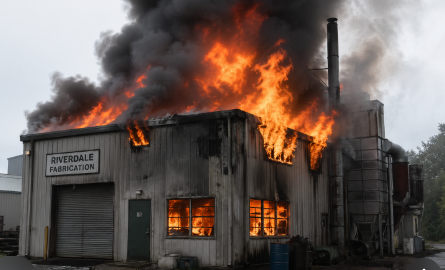
fire sm busin

Health and safety killing your business?

There is a common misconception among small business owners (SMEs) that Health and Safety (H&S) is a “big company problem.” Many believe that with fewer employees and less complex operations, the risks are negligible.
However, the reality in New Zealand tells a different story. Whether you are a retail shop, a small construction company, or a family-owned workshop, Health and Safety is not just a legal obligation—it is a critical factor in business survival.

app2

Managing Health and safety information

Managing health and safety paperwork needs to be a balance between what is desirable and what is practical. You need documentation to:
• record what has been done
• track what still needs to be done
• communicate clearly with your team
The real question isn’t whether paperwork should exist — it’s how do you manage it efficiently in a digital world?
Winsland have taken these challenges and built a system designed specifically for small and medium-sized businesses. Managing health and safety information is now simpler and more practical for all users. And its FREE.