Skip to content
due dil

Focus on Construction

Lately, we’ve been busy supporting a wide range of construction projects across South Auckland, working alongside builders, plumbers, electricians, drainlayers, painters, tilers—in fact, almost every specialist trade.

It’s been a valuable learning experience, reinforcing what we’ve long believed: simply putting a standard sign on the fence that everyone ignores or displaying a “Site Safe” sticker on a van does little to improve health and safety. In some cases, it can even create a false sense that health and safety is being effectively managed, which may increase risk.

There is still plenty of work to do in this high-risk sector. It is full of skilled, committed people, but health and safety processes are often inconsistent or ineffective.

We have also been involved in discussions with WorkSafe. This included situations where scaffolding is closed partway through being erected, or concerns are raised about workers being supported by a standard 200 × 50 mm scaffold plank. These illustrate the need for practical experience and recognition of the experise of qualified people. That’s a conversation for another day, but it highlights the challenges the industry continues to face.

A positive development is the new Approved Code of Practice (ACOP) for Identifying Health and Safety Roles and Responsibilities on a Residential Construction Site. Winsland has been invited to provide further input, having also contributed to the initial draft. The current target is for the ACOP to be published by the end of July 2026.

There is considerable confusion across the sector about roles and responsibilities, so the new ACOP should provide valuable clarity. However, it will not, on its own, solve all of the health and safety challenges facing residential construction.

We are also working with WorkSafe on the adequacy of existing guidance material and the need for an ACOP covering energy-related projects.

Contact us to discuss how we can support your health and safety needs.

All about prequalification

Clients using established prequalification providers are increasingly expressing frustration at the time, complexity, and cost involved in the process. They want an alternative path to prequalification appropriate to their nature – their size and the reality of typically working in a small team on a narrow range of activities.

As we have previously discussed in our article on prequalification (https://winsland.co.nz/pre-qual/), prequalification has evolved into a complex and costly process, largely driven by the requirements of large organisations and commercial providers. While well intentioned, it often places a disproportionate burden on small and medium-sized businesses.

Rather than simply highlighting the problem, we decided to do something to help SME along the alternative path to prequalification that already exists and which is appropriate to the nature of SME.

Industry platforms such as Tōtika recognise standardised contractor assessment. For SMEs audited by certified lead auditors against ISO 45001, the audit itself can provide an alternative means of demonstrating compliance with the standard. It covers the same ground, with ISO 45001 providing a common framework. Winsland consultants are now qualified to carry out these assessments.

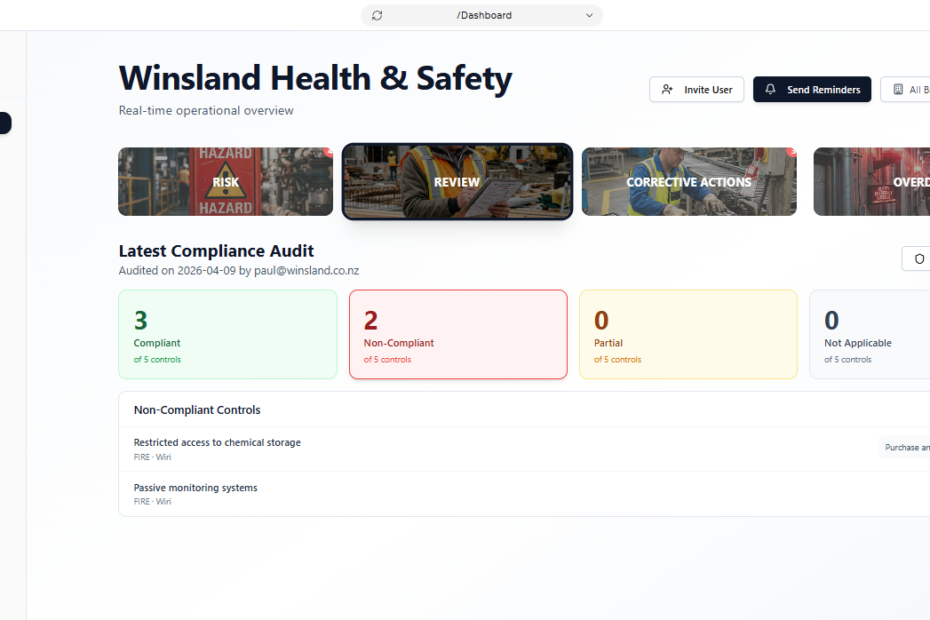
Combined with our Health and Safety App (https://winsland.co.nz/app/), which helps businesses create, manage, and store their health and safety records, we believe this provides a practical and cost-effective alternative to many traditional prequalification processes.

Revised Health and Safety Legislation

We have been holding off providing guidance on the proposed health and safety legislation while awaiting its final passage. However, implementation has now been deferred for almost another year.

For health and safety consultants, it is hardly worth spending time analysing the changes until the legislation is finalised. Unfortunately, that uncertainty is also likely to influence many small and medium-sized businesses—particularly those without dedicated health and safety staff. If businesses don’t know what the final requirements will be, and the political messaging suggests they will need to do less, there is little incentive to invest in change now.

Our views on the initial Bill, which have largely been retained in the version reported back to Parliament, remain unchanged. In particular, we continue to have concerns about the treatment of critical risks. You can read our earlier commentary here:
https://winsland.co.nz/wp-content/uploads/2026/03/Impact-of-HSWA-changes-on-small-businesses-an-update.pdf

The current Act already requires a PCBU (Person Conducting a Business or Undertaking) to eliminate risks, or where that is not reasonably practicable, to minimise them so far as is reasonably practicable. In practice, this test naturally gives priority to higher-consequence hazards—often referred to as critical risks. For most SMEs, the practical expectations are therefore unlikely to change significantly, despite the political debate. Sitting back and not identifying or managing risks is simply not an option.

In our experience, most businesses genuinely care about managing risk. For a small business, the loss of even one key person can be hugely disruptive and, in some cases, threaten the viability of the business. Regardless of the political discussion, business owners want their people to go home safe and healthy each day, and to come back fit for work the next.

The challenge is not willingness—it is knowing what to do. With limited resources and often limited health and safety expertise, many SMEs struggle to understand what is required and how to implement it effectively.

Recognising that this challenge is not going away, we have been working with local businesses to develop a simple, free app. It guides SMEs on what they need to do, when they need to do it, and provides the templates and documents needed to stay on top of their health and safety responsibilities.

Find out more about the app here:
https://winsland.co.nz/app/

Contact us to discuss your health and safety needs.
SDS – a key to chemical safety

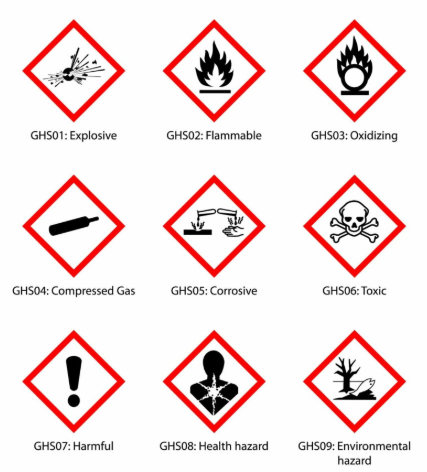
Safety Data Sheets (SDS) are a key to chemical safety safety, providing information on the hazards associated with chemicals and the precautions required for their handling, storage, emergency response and disposal.

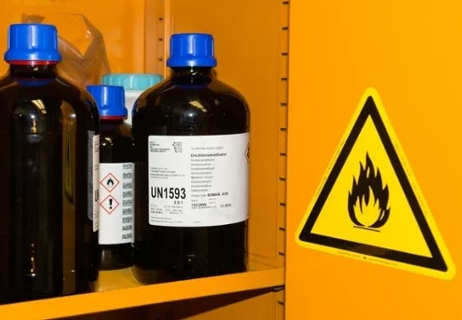
The SDS deliver safety working together with labelling of containers. The SDS provides more detailed information than, the product label. But the label is more visible and immediately accessible, while the SDS provides the supporting detail.

When examining issues with SDS, it is important to consider labelling as well. Organisations often have the required SDS available—possibly dog-eared and covered in workshop grime—but fall short when it comes to ensuring containers are correctly labelled.

apprentice

Are your workers incompetent

What are the options for determining competence. Its not about attending a one day course
One of the most common questions we get is when a refresh of a training course is required.
The answer may be “never”. There are of no mandatory periods – for the simple reason that competence is developed in many ways, such as working on the job. Sitting in an NZQA endorsed course for 6 hours with virtually everyone passing is not proof of competence.
We get asked about “Work and Height” training – but there is no one qualification for this. We get asked about a “Forklift License” – but aside from a Class Endorsement on the driver’s license (allowing you to drive on the road) there is none.
We get asked how to determine a person working in a job there is no relevant formal
qualification for – which is most labouring work.
So what are the options for determining competence?
For trades and roles with a formal training structure leading to a formal qualification, such as the trades or nursing, training is fundamental. And will include a significant practical “on the job” element.
Where there is no such training structure, competence requires checks on whether someone can apply their skills correctly in real-world conditions. To this end 1 on 1 observation on the job by and experienced person using a competency checklist for verification of competency. This can be done on a regular basis (e.g. 6 or 12 monthly). It may be done for someone starting a new job, returning from a long break, following an incident or near miss or when introducing new equipment or procedures.
The verification of competency process is an effective model for establishing competence.
Training is likely to be part of the process as well, but it certainly does not stand on its own.

Boosting worker engagement

Worker engagement builds a culture of shared responsibility for health and safety

Engaging employees in health and safety creates a culture of shared responsibility. It encourages people to identify risks, raise concerns, and contribute to safer ways of working. As a result, health and safety becomes something everyone owns, not just a management responsibility.

Furthermore, when employees participate in health and safety discussions and decisions, safe practices become part of everyday behaviour rather than a compliance exercise. For this reason, employers should actively involve employees in health and safety processes to strengthen workplace engagement and improve safety outcomes.

The law requires PCBUs (employers) must engage with employees on health and safety matters that affect them. This includes sharing relevant information, consulting with workers, and giving employees meaningful opportunities to contribute to health and safety decisions. Consequently, employers should plan how they will involve employees and encourage participation throughout the process.

The law also requires PCBUs to support worker representation. For example, workers may elect Health and Safety Representatives (HSRs) to represent their interests and raise health and safety concerns. Furthermore, if a workplace has 20 or more workers, the PCBU must establish a Health and Safety Committee when workers request one.

Together, these requirements help employees participate in health and safety management, influence decisions, and contribute to a safer workplace.

Health and safety overkill

The evidence is difficult to ignore. New Zealand continues to record workplace harm rates that compare poorly with many other developed countries. Workers are still being seriously injured or killed in preventable incidents across construction, agriculture, manufacturing, transport, forestry, and trades.
The deeper issue is capability. Most SMEs do not employ health and safety professionals. Owners wear multiple hats — operations, sales, staffing, finance, compliance — and health and safety becomes another competing demand in an already stretched week. When margins are tight, investing in proper systems, training, or external expertise can feel difficult to justify, particularly when the return is measured in incidents that hopefully never happen. Cost is part of the problem, but priority is often the bigger issue.

There is also a misconception that effective health and safety must be complex. In reality, for most SMEs, good practice is surprisingly simple and practical
The challenge is helping SMEs bridge the gap between legal obligation and practical implementation. Many need support that is affordable, industry-specific, and grounded in reality rather than compliance theatre. Regulators, industry bodies, insurers, and consultants all have a role to play in making competent guidance more accessible and less intimidating.

How do I handle a Worksafe visit?

“A Worksafe visit can only be bad news” – is the common reaction to Worksafe visit.

Practical Tips During a WorkSafe Visit.
1. Engage H&S advisors – their guidance can help interpret inspector queries and prepare accurate responses.
2. Control access – ensure visitors (INCLUDING THE WORKSAFE INSPECTOR) follow induction procedures and safety requirements.
3. Document everything – have up-to-date documentation ready: risk assessments, training records, and incident logs.
4. Staff awareness – ensure employees know hazard and incident reporting procedures and emergency protocols.
5. Preserve safety evidence – for serious events, secure the area and gather supporting materials like photos or CCTV.
6. Respond appropriately – follow advice, improvement, or prohibition notices promptly with documented actions.

To be fair a Worksafe visit is the regulator is checking compliance or investigating a serious incident. But it also serves to provide businesses with visibility on their health.
However, the level of experience of inspectors is varied and turnover high so they are not always right. If they stop your work or ask you to do something silly – don’t hesitate to take advice.

project hub

Cost of getting health and safety wrong

Navigating the complex landscape of Health and Safety (H&S) in New Zealand isn’t just a matter of “doing the right thing”—it’s about managing a rigorous legal framework that demands precision. For businesses in Auckland and across the country, the cost of a misstep often far outweighs the investment in professional guidance. It is easy and expensive to get it wrong. The documents are long and technical. Therefore, seeking specialist advice is crucial for ensuring health and safety performance and compliance for businesses in Auckland and throughout NZ..
Naturally we recommend the Winsland team.

fire sm busin

Health and safety killing your business?

There is a common misconception among small business owners (SMEs) that Health and Safety (H&S) is a “big company problem.” Many believe that with fewer employees and less complex operations, the risks are negligible.
However, the reality in New Zealand tells a different story. Whether you are a retail shop, a small construction company, or a family-owned workshop, Health and Safety is not just a legal obligation—it is a critical factor in business survival.

app2

Managing Health and safety information

Managing health and safety paperwork needs to be a balance between what is desirable and what is practical. You need documentation to:
• record what has been done
• track what still needs to be done
• communicate clearly with your team
The real question isn’t whether paperwork should exist — it’s how do you manage it efficiently in a digital world?
Winsland have taken these challenges and built a system designed specifically for small and medium-sized businesses. Managing health and safety information is now simpler and more practical for all users. And its FREE.

pocket

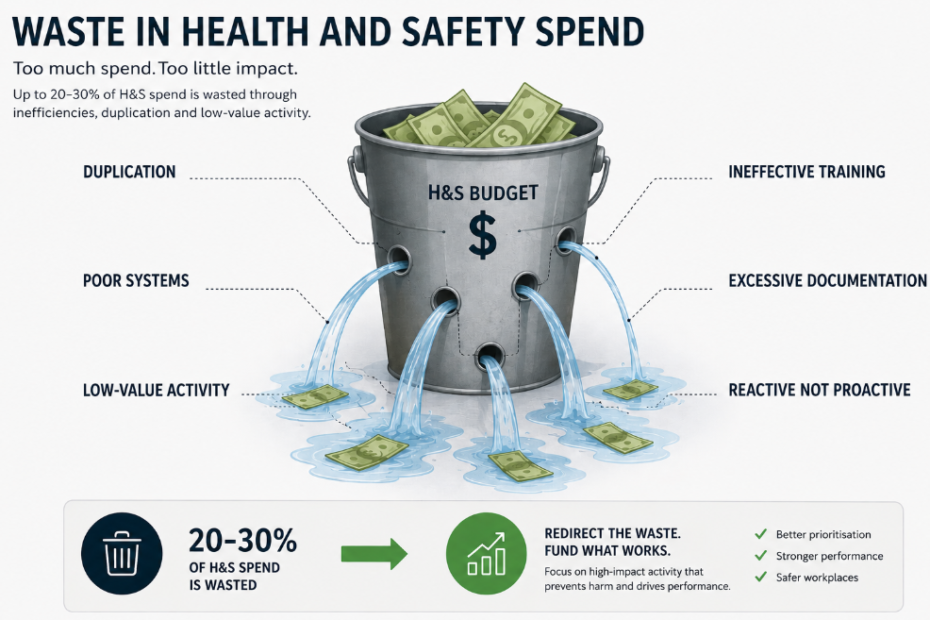
Stop wasting money on health and safety

Targeting health and safety spend so it is effective (optimises safety and ensures compliance) and strategic (enhances the business). Understanding health and safety cost is essential for organisations aiming to make informed decisions.

At face value, implementing safety measures, training, equipment, and maintaining compliance do drive direct costs that impact the bottom line. So targeting health and safety spending is critical to the success of a business. Only spending on safety after an incident occurs (e.g., legal fees, compensation, fines) is often far more expensive than proactive prevention.

mobile driving

Why people take risks

Understanding why people take risks gives a clue to how to reduce risk taking behaviours. Here’s a starter;

Complacency: Repeatedly performing a dangerous task without a negative consequence leads the brain to recalibrate “danger” as “normal.”

Competing Priorities: Individuals often prioritise efficiency, production pressure, or social pressure (looking “uncool”) over safety.

Cognitive Shortcuts: If a risk hasn’t resulted in a recent accident, people assume the risk is low or non-existent, especially if the risky action provides a “positive feeling” like speed or job satisfaction.

Ignorance: A simple lack of knowledge, skills, or mentoring prevents people from knowing how to perform an activity safely.

psyc

Psychological harm – how to deal with it.

We are defining psychological harm as bullying, harassment or work induced stress which is unreasonable, repeated and has the potential to cause serious mental harm.
In an employment setting, sexual and racial harassment is defined in the Employment Relations Act 2000. There is no definition of bullying so the courts have had to rely on WorkSafe guidance material. Worksafe define bullying as an action which is unreasonable, repeated and has the potential to cause serious mental harm. These criteria seem sound to us as well as tests of what constitutes bullying or harassment.
Given mental harm is typically invisible, this area is open to spurious claims from disaffected workers. On the other hand, many employers are not prepared to recognise and deal with mental harm.
The employer needs to be concerned with things related to the workplace. If there are factors outside of work, they are out of scope but perhaps very relevant – potentially more relevant than what is manifesting itself in the workplace.
If there are issues of psychosocial harm arising, there are courses of action available under the Health and Safety at Work Act 2015 or the Employment Relations Act 2000.
The HSWA requires a PCBU to eliminate harm or, if this is not possible, to minimise harm as far as reasonably practicable. “Elimination” will likely become an employment issue. But any lesser control is likely not to be “reasonably practicable” based on the proposed tests in legislation. It would require changes in the workplace or the individual’s employment conditions and thus likely be an employee relations issue. This is why we maintain psychological harm sits in the realm of HR not HSE, along with the fact that the procedures for managing this harm are part of an organisations management procedures.

maintenance work at reserve bank lobby

SSSP requirements in NZ explained

What makes a good SSSP?

SSSP need to reflect the specific site – that’s why there are 3 “S’s”. Too many contractors roll out the same material for every site.

It’s ok to use a standard risk register as a baseline but remove what is irrelevant. Reviewers don’t appreciate reading through things that don’t apply. And ensure the site-specific risks are both included and appropriately worded in the risk register. Further, ensure the risks / hazards advised by the main contractor are included.

Same with Safe Work Procedures – ensure they describe the work accurately.

Ensuring workers are competent is fundamental to ensuring safety. To this end the SSSP needs to be clear with detailing competencies. “Height training” for example, is meaningless. Further generic courses such as a Site Safe Passport might sound good but do not establish any particular competence. What is required is documentation which details formal recognised technical training and details the nature of practical experience. We have a separate post on how we establish competency.

solar panels

Common sense is a poor H&S policy

We smile when we see a sign claiming, “Our HSE policy is common sense.” Then, we grimace. Are these organizations brave, or simply ignorant?
While individuals bear the primary responsibility for their own safety, they do not carry that burden alone. Businesses that adopt a “common sense” policy make a fundamental mistake: they assume everyone possesses an equal measure of it. This policy functions perfectly until someone leaves their judgment at the gate and a serious accident occurs. An accident is a brutal, expensive lesson—a risk no responsible business should take.
The Illusion of Low-Risk Environments
Even office-based organizations—where the most critical risks seem to be RSI or paper cuts—cannot hide behind “common sense.” Every workplace harbours hidden dangers:
• Fire hazards and blocked exit routes.
• Faulty electrical appliances and data-cabling trip hazards.
• Traffic risks as workers navigate parking lots and commutes.
Relying on common sense suggests an organization has lost control of its critical risks. It indicates a leadership team that relies on luck or is simply too lazy to manage safety proactively.