
Safety Data Sheets (SDS) provide important information about the hazards, safe use, storage and emergency response for hazardous substances. NZ businesses must make the required information available to workers.
What are SDS?
Safety Data Sheets (SDS) provide information on the hazards associated with hazardous substances. It informs on precautions required for their handling, storage, emergency response and disposal.
You may still hear the term Material Safety Data Sheet (MSDS). In New Zealand, the current term is Safety Data Sheet (SDS).
What is a hazardous substance in NZ?
A hazardous substance is a substance that can cause harm because it is explosive, flammable, corrosive, toxic, oxidising, or harmful to the environment. These substances are common in many workplaces and include fuels, solvents, cleaning products, paints, gases, agrichemicals and many other everyday products — not just what we typically think of as “chemicals.”
How do I know if it is a hazardous substance?
The first clue is the label.
When checking a product, look for three key things:
- Hazard pictograms: Diamond-shaped symbols with a red border and an image inside. They provide a quick visual warning about the type of hazard.
- Signal words: Words such as “Danger” or “Warning” that indicate the level of hazard.
- Hazard statements: Short statements describing the specific hazard, such as “Toxic if swallowed” or “Highly flammable liquid and vapour.”
If you see these warnings on a product label, take a closer look at the hazards and follow the required safe-handling and storage instructions and, the substance is new to you, refer to the SDS.
Where to get Safety Data Sheets?
It is the supplier responsibility to provide these – including replacements if you need them AND updates as SDS can’t be more than 5 years old.
Who needs Safety Data Sheets?
Every PCBU using or supplying hazardous chemicals. They must be available to any worker who handles or may be exposed to hazardous substances.
The full SDS remains a key to chemical safety. It is an important reference document and may be essential in laboratories, chemical manufacturing environments, emergency situations, or regulatory investigations.
The challenge of reading a SDS
Reading them: Section 2 has to provide information which identifies the hazard. Here’s what BP provide for Diesel … fairly meaningless to most people, but there is information on managing the hazard in the SDS if you keep reading.

They are too long and complex- for many workplaces, the full SDS contains far more information than workers require for day-to-day use. This can make it difficult to identify the key safety information quickly. As a result, the important information may not be read or understood.
Take section 2 – it describes the
The challenge of making the SDS available
Organisations are required to make the SDS readily accessible to workers, even if workers can’t read them. Here there is good news. Whilst dog-eared SDS and covered in workshop grime are common, it does not have to be that way.
Provided employees can access them without delay if needed.
- SDS can be stored electronically
- SDS can be stored in an open office. For many small businesses operating from a single site, a centrally located SDS repository may be sufficient.
- In chemical storage unit along with chemicals
Is there a short form of SDS that can be used to deliver safety?
Yes. WorkSafe states: “Instead of the SDS, you can make a condensed version of its key information readily accessible.”
While some suppliers provide these, many businesses create their own using information from the SDS.
To be effective, a condensed version should contain:
- Substance name.
- Hazard pictograms.
- HSNO classifications or GHS hazard statements.
- Key hazards presented by the substance.
- Precautions for:
- Handling.
- Storage.
- Required PPE.
- First aid instructions.
- Firefighting measures.
- Emergency contact numbers.
The objective is not to reproduce the SDS in a smaller font. The objective is to provide workers with the information they need to use the substance safely.
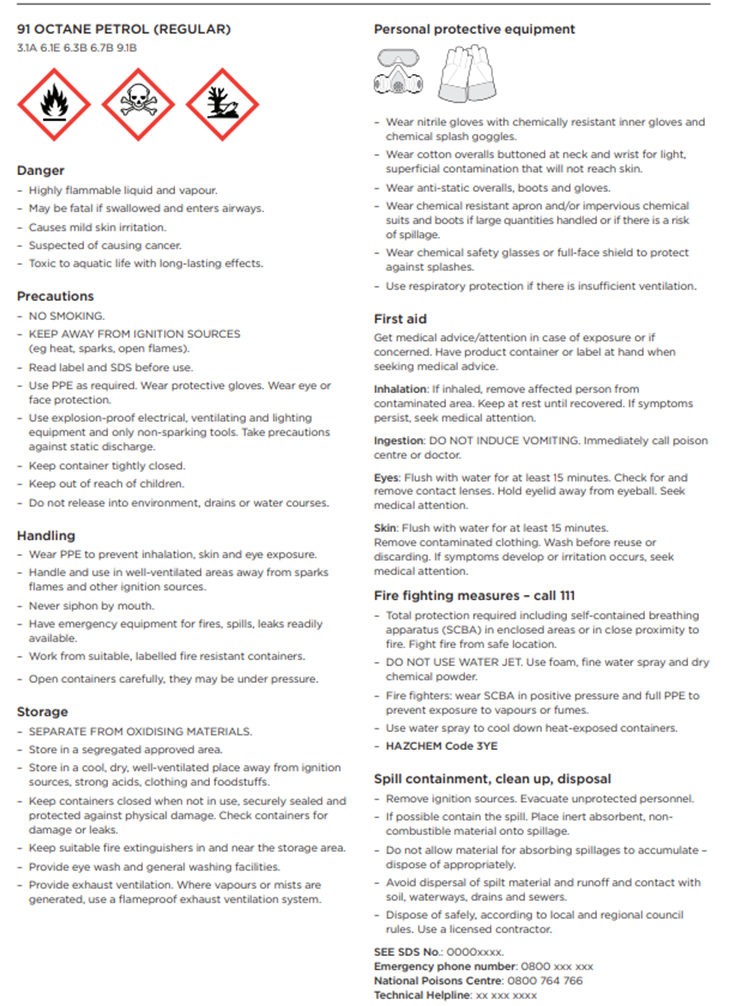
Figure 2 Example Safety Data Card – adapted from WorkSafe guidance.
So are Safety Data Sheets delivering safety?
The objective of SDS is not to accumulate folders of paperwork. It is to deliver safety by providing workers with information to understand the hazards associated with the substances they use and know how to work with them safely.
For most workplaces, effective labelling supported by training and access are the parallel key to chemical safety along with SDS. SDS alone will not deliver chemical safety.
For compliance purposes, business need to retain SDS and they need to be accessible.
Keep SDS in a central, readily accessible repository, maintain compliant labels on all containers, and provide workers with concise safety information they can understand and use – that way you are compliant with the relevant regulations.
Got a Health & Safety Problem?
Not sure what you need to do? Talk to Winsland. We provide practical, proportionate Health & Safety advice for New Zealand businesses.
Contact Winsland →