Health and Safety “Overkill” … the Data Suggests Most SMEs Aren’t Doing Enough
In New Zealand, complaints about “health and safety overkill” have become almost cultural shorthand. Stories circulate about ladders being banned, paperwork multiplying, and small business owners feeling buried under compliance requirements that seem disconnected from real-world risk.
Current state of H&S in SME
But beneath the frustration sits a more uncomfortable reality: most small and medium-sized businesses (SMEs) are not doing enough health and safety — and many would struggle to even know whether they are or not. We see SMEs in Auckland operate with minimal health and safety beyond basic signage and a first aid kit – this is reflected across the country.
This is not usually because business owners are reckless or indifferent. In fact, most genuinely care about their staff and want everyone to go home safely. The problem is that many owners confuse good intentions with effective safety management.
There is a widespread issue: countless SMEs are still operating reactively, relying on luck, experience, and “common sense” rather than structured risk management. And the Bill currently before parliament will make this worse with the political spin being changes are to reduce the requirements on SME. Frankly, a move in the wrong direction.
The evidence
The evidence is difficult to ignore. New Zealand continues to record workplace harm rates that compare poorly with many other developed countries. Workers are still being seriously injured or killed in preventable incidents across construction, agriculture, manufacturing, transport, forestry, and trades.
What are the options for SME in NZ
Unlike accounting or tax obligations, where clear systems and professional support are normalised, health and safety expectations are not clear and obvious. Owners hear broad legal duties like “manage risks so far as reasonably practicable” but dont know what it actually means. As a result, many SMEs default to one of three approaches.
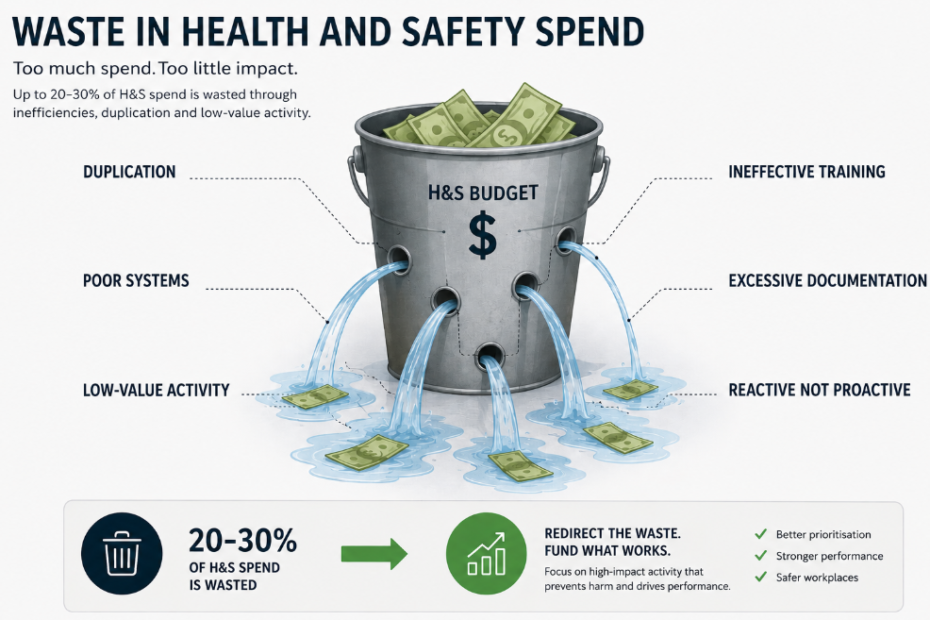
The first is avoidance: doing the bare minimum and hoping regulators never knock on the door. The second is copying generic templates downloaded online that bear little resemblance to the actual risks of the business. The third is overcompensating with excessive documentation that creates the appearance of compliance without improving safety outcomes. None of these approaches work.
SME lacking capability in H&S
The deeper issue is capability. Most SMEs do not employ health and safety professionals. Owners wear multiple hats — operations, sales, staffing, finance, compliance — and health and safety becomes another competing demand in an already stretched week. When margins are tight, investing in proper systems, training, or external expertise can feel difficult to justify, particularly when the return is measured in incidents that hopefully never happen. Cost is part of the problem, but priority is often the bigger issue.
There is also a misconception that effective health and safety must be complex. In reality, for most SMEs, good practice is surprisingly simple and practical:
- Identifying the few critical risks that could seriously injure someone.
- Having simple controls that are actually followed.
- Regularly checking whether controls work.
- Training workers properly.
- Supervising inexperienced staff.
- Encouraging reporting without blame.
- Learning from near misses before they become fatalities.
That is not overkill. That is basic good management rather than “health and safety”
The challenge is helping SMEs bridge the gap between legal obligation and practical implementation. Many need support that is affordable, industry-specific, and grounded in reality rather than compliance theatre. Regulators, industry bodies, insurers, and consultants all have a role to play in making competent guidance more accessible and less intimidating.
Bridging the gap
At the same time, SMEs themselves must stop treating health and safety as optional until something goes wrong.
New Zealand’s workplace harm statistics are not driven primarily by businesses doing too much health and safety. They are driven by inconsistent standards, underinvestment, informal practices, and unmanaged risk across thousands of smaller operations.
The debate should not be whether health and safety has gone too far. The real question is why so many businesses still operate without enough of it — and why so many owners are left to figure it out alone.
Winsland has several options for working with SME in Auckland and beyond. We have the people and tools to help SME with health and safety – simply, practically and with minimal bottom line impact.