
Common concerns
“A Worksafe visit can only be bad news” – is the common reaction to Worksafe visit. Concern with the business impact leads to common questions including:
- Is it ok to bring in an H&S advisor to support us during the visit?
- What are PCBU obligations during WorkSafe visit?
- What documents will WorkSafe want?
- Worksafe are saying this. My information is they are wrong. Can I challenge them?
- Can I restrict their access to site, to employees, information?
- How to respond to a WorkSafe improvement notice?
- How to respond to a prohibition notice?
Practical Tips During a WorkSafe Visit
- Engage H&S advisors – their guidance can help interpret inspector queries and prepare accurate responses.
- Control access – ensure visitors (INCLUDING THE WORKSAFE INSPECTOR) follow induction procedures and safety requirements.
- Document everything – have up-to-date documentation ready: risk assessments, training records, and incident logs.
- Staff awareness – ensure employees know hazard and incident reporting procedures and emergency protocols.
- Preserve safety evidence – for serious events, secure the area and gather supporting materials like photos or CCTV.
- Respond appropriately – follow advice, improvement, or prohibition notices promptly with documented actions.
To be fair a Worksafe visit is the regulator is checking compliance or investigating a serious incident. But it also serves to provide businesses with visibility on their health
The law
As the Health and Safety regulator, Worksafe has the right to access and inspect workplaces. Sections 168–174 of the HSW Act give inspectors powers to enter and inspect workplaces at any reasonable time to perform their regulatory functions.
There are limitations if the workplace is in a private dwelling. The inspector needs to produce ID if asked and act reasonably and only for the purposes prescribed in the HSWA.
For the Worksafe view of how they fulfil their role see here.
In practice
What a Worksafe visit usually involves is an on-site review of a workplace by an inspector. How long and what is involved depends on the purpose of the visit.
It is not required that Worksafe give prior notice of a visit.
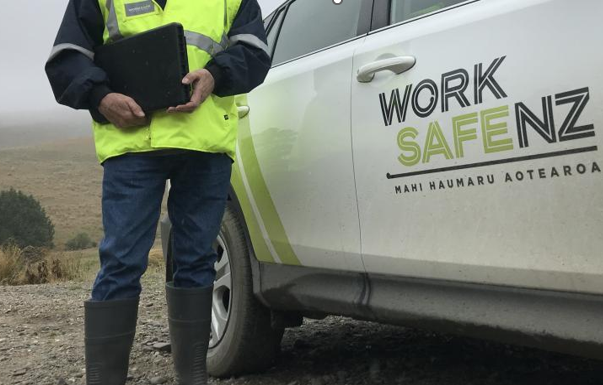
It would be most unlikely the inspector will not start with the person in charge. If this does not happen stop them, ask them to move to a safe area, ask for their ID, purpose of visit, who and what they want to see AND require they are inducted the same any other visitor. You are entitled to accompany them – in other words, treat them as you would any other visitor.
WHAT TO EXPECT – INVESTIGATION OF SERIOUS EVENT
If Worksafe are on site for a serious event or injury, you will have already notified them and activated site emergency procedures. Thus, prior to their arrival you will have:
Made the area safe
- Remove immediate danger if it is safe to do so.
- Leave things in situ – but stop further damage.
Helped injured people
- First aid
- Call 111 if needed
Preserved the incident scene
- Secure the area with barriers/tape
- Prevent unauthorized access
You may find it useful to:
Locate relevant CCTV footage
Take photographs
It is strongly advised that you engage specialist H&S advice for the visit if at all possible.
WHAT TO EXPECT – NORMAL WORKSAFE VISIT
Site walkthrough
The inspector will want to physically inspect the workplace.
Do not forget PPE and instruction on site hazards before starting.
Observation of work activities
They may watch work happening where there is potential risk. Manual handling, Machinery operation, interaction of people and machines are common.
Staff discussions
Workers and managers may be asked about their training, their knowledge of procedures for reporting hazards, of emergency procedures, participation in health and safety discussions.
Checking evidence of – including:
Facilities being in place (in particular emergency)
Risk assessments
Monitoring risk
Worker engagement
Incident reporting
Training
Preparation – Normal Worksafe Visit
It will be too late to address issues with an inspector about to arrive or on the doorstep for a Worksafe visit. If the opportunity presents itself;
- Ensure staff availability
- Fix obvious housekeeping or maintenance issues
- Check guards, e-stops – lock out and tag any equipment with issues.
- Check emergency equipment is in place
- Assemble relevant documents starting with ensuring the hazard register is current
What They Look For – Normal Worksafe Visit
Worksafe will be looking for (not an exhaustive list)
- Physical deficiencies / compliance.
- Whether risks are actually managed in practice
- Worker engagement
- Supervisor capability
- Basic housekeeping and maintenance
- Evidence of ongoing monitoring
- Whether documentation reflects reality
Outcomes – Normal Worksafe Visit
- Verbal advice – Minor issues may simply result in guidance.
- Improvement Notice – Requires problems to be fixed within a timeframe.
- Prohibition Notice – Work must stop immediately if there is serious risk.
- Infringement or prosecution – For serious breaches, especially where: there is serious harm, risks were known but not managed, repeated non-compliance.
Before responding to Worksafe It is strongly advised that you engage specialist H&S advice for the visit if at all possible.
Common NZ SME Problems
Common issues inspectors identify include: (not an exhaustive list)
- Faulty equipment
- Missing training – particularly inductions
- Pedestrian segregation issues
- Missing or weak incident investigation
- Outdated risk registers
A key purpose of a Worksafe visit is to provide businesses with visibility on their health and safety and to identify opportunities to improvement and minimise potential harm.