What is the problem with labelling of chemicals?
Labelling is often where chemical management systems break down and there is a failure to manage the hazards associated with hazardous substances.
Businesses occasionally encounter products with incomplete or non-compliant labelling, particularly imported products or products transferred between suppliers. Manufacturers and suppliers are responsible for correctly labelling the products they sell.
Users may also unintentionally obscure labels by how containers are stored or positioned during use.
However, the most common issue arises when chemicals are decanted from their original container into another container.
This typically occurs when:
- Large quantities are transferred into smaller containers.
- Generic spray bottles are used.
- Reusable containers are used for different substances.
In these situations, the original labelling is often lost.
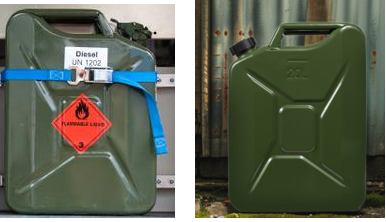
Figure 3 Spot the difference
What are the options for chemical labelling?
When a substance is transferred into another container, responsibility for maintaining appropriate labelling generally falls on the user.
As part of managing the hazards associated with chemicals, products supplied by manufacturers or distributors should already be appropriately labelled. However, when the substance is no longer in the original container, businesses must ensure the necessary hazard information remains available.
Where a substance is decanted into another container and remains under the immediate control of the person using it, full secondary labelling may not always be necessary. However, containers used for storage or shared use should be appropriately labelled.
If a chemical is not in the original container, what should the label contain?
At a minimum:
- Product name or chemical name.
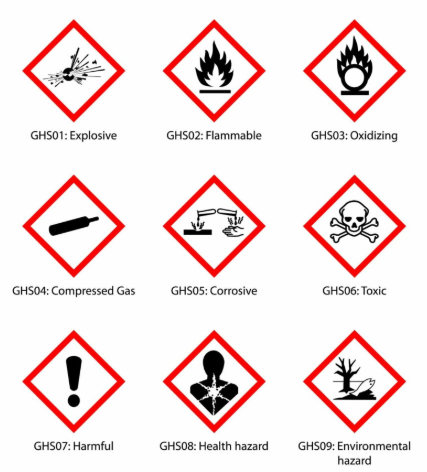
- Relevant hazard pictogram(s).
- Symbols in a diamond shape
- Hazard statements.e.g.
- Highly Flammable
- Harmful if swallowed
- Toxic if swallowed
- Precautionary statements. e.g.
- Wear protective gloves
- If on skin: rinse with water
- Store locked up
Labels that only contain a pictogram provide useful information but may not be fully compliant. Workers may not always understand the pictogram alone, so including written hazard information is recommended.
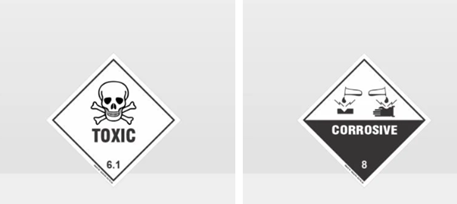
Figure 4 Labels incorporating text and pictogram
An original label may sometimes be reused where practical and appropriate.
Whilst not reasonably practicable for most businesses, a full label can be manufactured through https://sdsmanager.com/nz/create-secondary-container-label/.
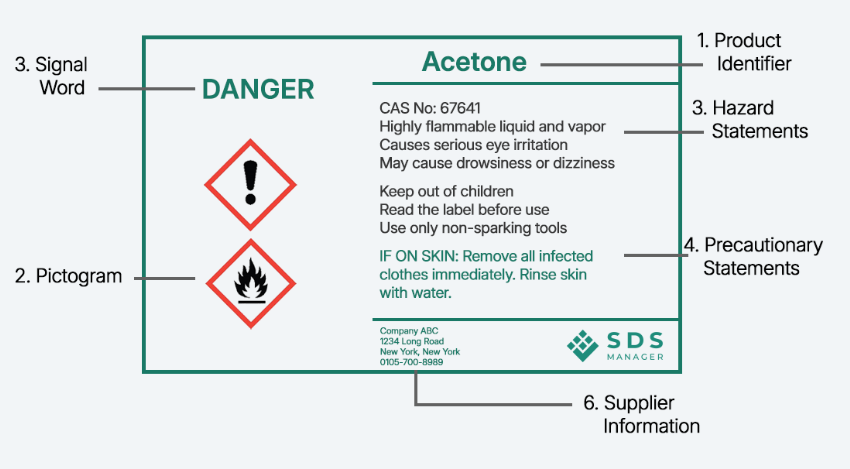
Figure 5 Fully compliant label
Can I rely on overseas chemical labelling?
Yes.
New Zealand recognises chemical labelling systems from:
- European Union (EU).
- Australia.
- Canada.
- United States.