Skip to content
apprentice

Are your workers incompetent

What are the options for determining competence. Its not about attending a one day course
One of the most common questions we get is when a refresh of a training course is required.
The answer may be “never”. There are of no mandatory periods – for the simple reason that competence is developed in many ways, such as working on the job. Sitting in an NZQA endorsed course for 6 hours with virtually everyone passing is not proof of competence.
We get asked about “Work and Height” training – but there is no one qualification for this. We get asked about a “Forklift License” – but aside from a Class Endorsement on the driver’s license (allowing you to drive on the road) there is none.
We get asked how to determine a person working in a job there is no relevant formal
qualification for – which is most labouring work.
So what are the options for determining competence?
For trades and roles with a formal training structure leading to a formal qualification, such as the trades or nursing, training is fundamental. And will include a significant practical “on the job” element.
Where there is no such training structure, competence requires checks on whether someone can apply their skills correctly in real-world conditions. To this end 1 on 1 observation on the job by and experienced person using a competency checklist for verification of competency. This can be done on a regular basis (e.g. 6 or 12 monthly). It may be done for someone starting a new job, returning from a long break, following an incident or near miss or when introducing new equipment or procedures.
The verification of competency process is an effective model for establishing competence.
Training is likely to be part of the process as well, but it certainly does not stand on its own.

Boosting worker engagement

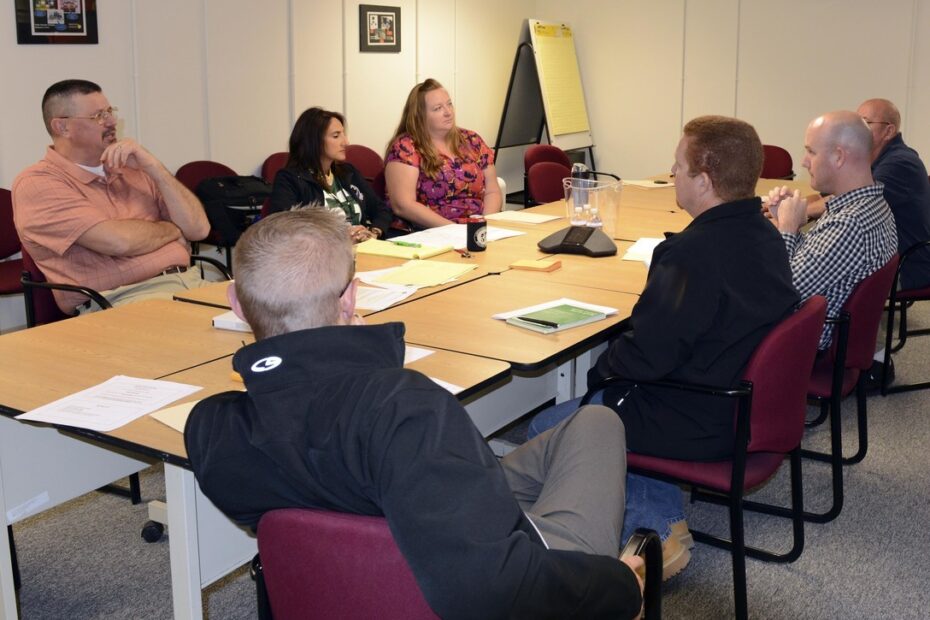
Worker engagement builds a culture of shared responsibility for health and safety

Engaging employees in health and safety creates a culture of shared responsibility. It encourages people to identify risks, raise concerns, and contribute to safer ways of working. As a result, health and safety becomes something everyone owns, not just a management responsibility.

Furthermore, when employees participate in health and safety discussions and decisions, safe practices become part of everyday behaviour rather than a compliance exercise. For this reason, employers should actively involve employees in health and safety processes to strengthen workplace engagement and improve safety outcomes.

The law requires PCBUs (employers) must engage with employees on health and safety matters that affect them. This includes sharing relevant information, consulting with workers, and giving employees meaningful opportunities to contribute to health and safety decisions. Consequently, employers should plan how they will involve employees and encourage participation throughout the process.

The law also requires PCBUs to support worker representation. For example, workers may elect Health and Safety Representatives (HSRs) to represent their interests and raise health and safety concerns. Furthermore, if a workplace has 20 or more workers, the PCBU must establish a Health and Safety Committee when workers request one.

Together, these requirements help employees participate in health and safety management, influence decisions, and contribute to a safer workplace.


app2

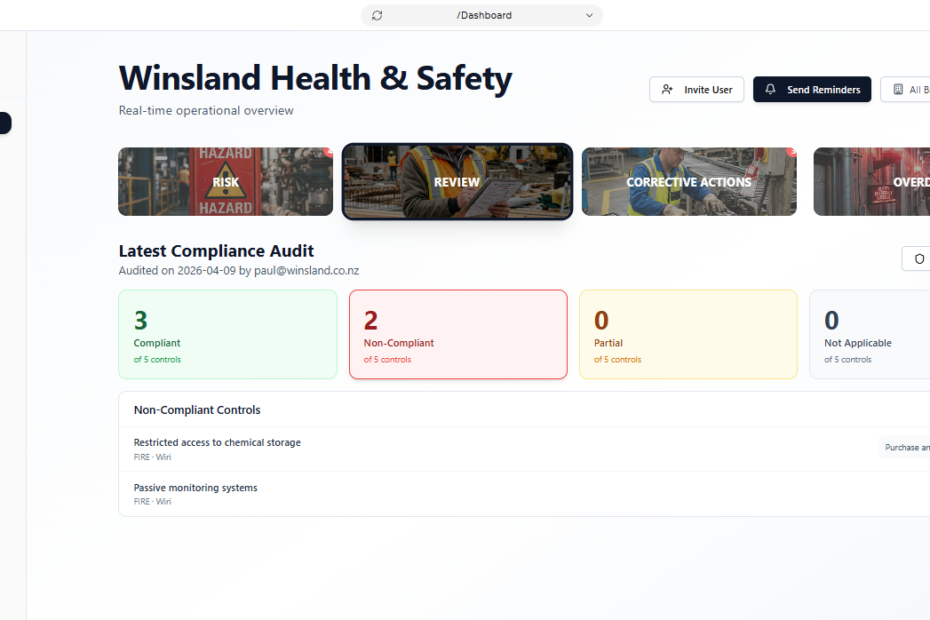
Managing Health and safety information

Managing health and safety paperwork needs to be a balance between what is desirable and what is practical. You need documentation to:
• record what has been done
• track what still needs to be done
• communicate clearly with your team
The real question isn’t whether paperwork should exist — it’s how do you manage it efficiently in a digital world?
Winsland have taken these challenges and built a system designed specifically for small and medium-sized businesses. Managing health and safety information is now simpler and more practical for all users. And its FREE.

mobile driving

Why people take risks

Understanding why people take risks gives a clue to how to reduce risk taking behaviours. Here’s a starter;

Complacency: Repeatedly performing a dangerous task without a negative consequence leads the brain to recalibrate “danger” as “normal.”

Competing Priorities: Individuals often prioritise efficiency, production pressure, or social pressure (looking “uncool”) over safety.

Cognitive Shortcuts: If a risk hasn’t resulted in a recent accident, people assume the risk is low or non-existent, especially if the risky action provides a “positive feeling” like speed or job satisfaction.

Ignorance: A simple lack of knowledge, skills, or mentoring prevents people from knowing how to perform an activity safely.

psyc

Psychological harm – how to deal with it.

We are defining psychological harm as bullying, harassment or work induced stress which is unreasonable, repeated and has the potential to cause serious mental harm.
In an employment setting, sexual and racial harassment is defined in the Employment Relations Act 2000. There is no definition of bullying so the courts have had to rely on WorkSafe guidance material. Worksafe define bullying as an action which is unreasonable, repeated and has the potential to cause serious mental harm. These criteria seem sound to us as well as tests of what constitutes bullying or harassment.
Given mental harm is typically invisible, this area is open to spurious claims from disaffected workers. On the other hand, many employers are not prepared to recognise and deal with mental harm.
The employer needs to be concerned with things related to the workplace. If there are factors outside of work, they are out of scope but perhaps very relevant – potentially more relevant than what is manifesting itself in the workplace.
If there are issues of psychosocial harm arising, there are courses of action available under the Health and Safety at Work Act 2015 or the Employment Relations Act 2000.
The HSWA requires a PCBU to eliminate harm or, if this is not possible, to minimise harm as far as reasonably practicable. “Elimination” will likely become an employment issue. But any lesser control is likely not to be “reasonably practicable” based on the proposed tests in legislation. It would require changes in the workplace or the individual’s employment conditions and thus likely be an employee relations issue. This is why we maintain psychological harm sits in the realm of HR not HSE, along with the fact that the procedures for managing this harm are part of an organisations management procedures.