
Pathways to Health and Safety improvement and compliance
-
Psychological harm – what you need to do.
-
Lessons on Due Diligence
-
Humans are programmed to take risks
-
Targeted health and safety spend
-
Competence – how to prove it
-
Site Specific Safety Plans (SSSP) – room for improvement
-
“Common sense” is not a great H&S policy
-
D.I.Y health and safety
-
Changes in legislation – implications for small business
-
What is “reasonably practicable” ?
Click the heading view the full post
-

Psychological harm – what you need to do.
Psychological harm includes bullying, harassment or work induced stress that is unreasonable, repeated and has the potential to cause serious mental harm. Given mental harm is typically invisible, this area is open to spurious claims. On the other hand, many employers can’t see thus don’t deal with mental harm.
-

Lessons on Due Diligence
The case of Maritime NZ v Anthony Michael Gibson, 2024, which resulted in a $130,000 fine and $60,000 in costs against the CEO of the Ports of Auckland, gained attention for the size of the fine. The judgement also contained some timely advice on due diligence. In short: First – get out of your seat, […]
-

Humans are programmed to take risks
We are often asked why people take risks – and what can be done about it? To consider solutions we need to understand the cause. There are books on the subject, but the need is for something succinct so we have put together our thinking on why people take risks. It is starting point for […]
-

Targeted health and safety spend
Health and safety investments are not about spend, but rather the effectiveness and strategic allocation of those funds. At face value, implementing safety measures, training, equipment, and maintaining compliance do drive direct costs that impact the bottom line. So targeting spending is critical.
-

Competence – how to prove it
We get asked about “Work and Height” training – there is no one qualification for this. We get asked how to determine a person working in a job there is no relevant formal qualification for – which is most labouring work. Sitting in a course for 6 hours with virtually everyone passing is not proof […]
-
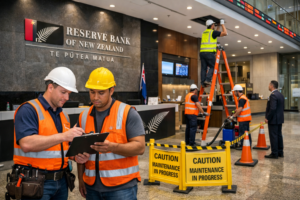
Site Specific Safety Plans (SSSP) – room for improvement
The Site Specific Safety Plan (SSSP) details potential risks around the work and the site, how these will be controlled and what systems will be used to manage health & safety. The problem is many NZ companies cannot provide acceptable SSSP. They throw whatever paperwork they can fing together and hope the receiver never reads […]
-

“Common sense” is not a great H&S policy
Businesses adopting “use your common sense” as their health and safety policy are making the fundamental mistake. They are assuming everyone has an equal measure of common sense. The policy works until someone leaves their common sense at the gate and there is a serious accident.
-
D.I.Y health and safety
The reality for many businesses is they cant afford health and safety support. So they do it themselves on a best endevours basis. There are 3 basic steps: For more detail on what is involved see the link below.
-

Changes in legislation – implications for small business
Changes to health and safety legislation are coming. The question is what it means for small to medium business. The bill before parliament indicates a huge potential for confusion as the rule writers struggle to define what is a critical risk and what is not and Approved Codes of Practice provide very prescriptive requirements across the board. Watch this space …
-

What is “reasonably practicable” ?
Legislation requires that due diligence is performed to minimise risks – so far as is reasonably practicable (SFARP) . There is no formula for determining what is “reasonably practicable”, rather there are a set of considerations which inevitably track to the cost and whether the cost is grossly disproportionate to the risk. Its a tricky but critical area when deciding on control.